



No matter how robust your storage and handling procedures are, workplace spills can still occur. According to the Health and Safety Executive (HSE), every workplace that stores or uses hazardous substances should have suitable emergency procedures in place, along with trained personnel and appropriate spill response equipment.
Having a clear spill response plan in place can make all the difference. Here's a step-by-step guide on what to do when a spill happens.
Step-by-Step Spill Response Guide
Step 1: Stop and Assess the Situation
Before taking any action:
- Identify the substance that has been spilled.
- Check for any immediate danger to people.
- Determine whether the spill can be safely managed by trained employees.
- If there is a serious risk to health or safety, evacuate the area and contact the emergency services.
Step 2: Secure the Area
Reduce the risk of further harm by:
- Keeping unauthorised personnel away.
- Using cones or warning signage.
- Stopping vehicle and pedestrian traffic.
- Removing ignition sources if flammable liquids are involved.
Step 3: Put on the Correct PPE
Before approaching the spill:
- Wear suitable chemical-resistant gloves.
- Use eye protection where required.
- Wear coveralls or protective clothing.
- Use respiratory protection if recommended by the Safety Data Sheet.
Step 4: Contain the Spill
Prevent the spill from spreading by:
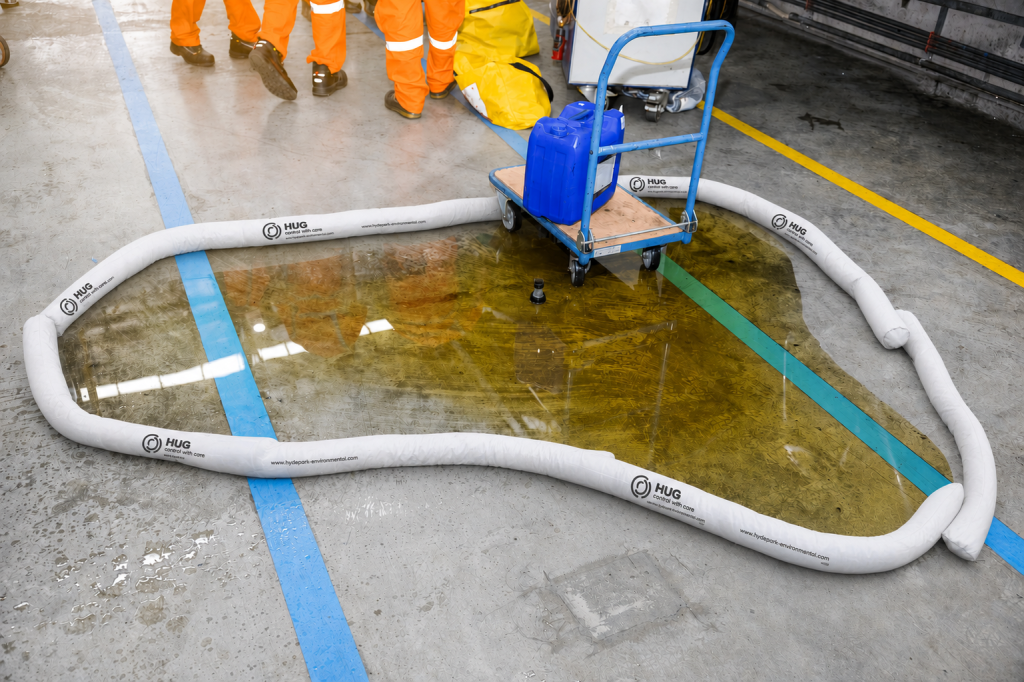
- Placing absorbent socks or booms around the spill.
- Protecting nearby drains with drain covers or mats.
- Stopping the leak at its source if it is safe to do so.
- Preventing contamination of watercourses or surrounding land.
Step 5: Clean Up Safely
Once the spill is contained:
- Use the correct absorbents for the liquid involved.
- Collect contaminated absorbent materials.
- Place waste into suitable disposal bags or containers.
- Dispose of waste in accordance with environmental regulations.
Step 6: Report and Restock
After the clean-up:
- Record the incident.
- Investigate the cause to prevent recurrence.
- Replace any spill kit items that were used.
- Review whether additional spill prevention measures are required.
What Do UK & Irish Safety Authorities Recommend?
The HSE, HSENI and environmental regulators all promote a proactive approach to spill management. Their guidance recommends that businesses should:
- Carry out regular COSHH risk assessments.
- Train employees in spill response procedures.
- Keep spill kits close to areas where hazardous substances are stored or used.
- Protect drains from contamination.
- Regularly inspect storage areas and containers.
- Maintain written emergency response procedures.
- Review spill incidents to improve future preparedness.
These simple measures can significantly reduce environmental impact while helping businesses meet their legal responsibilities under COSHH and environmental protection legislation.
How Hyde Park Environmental Can Help:
Having the right equipment on-site can make all the difference when a spill occurs.
We supply everything needed for an effective spill response, including spill kits, absorbents, drain protection, spill pallets, bunded storage and COSHH-compliant chemical storage solutions. Our team can also carry out site visits to assess your current storage arrangements, identify potential risks and recommend the most appropriate spill prevention equipment for your workplace.
Whether you're looking to improve compliance, upgrade your spill response capabilities or future-proof your site, our experts are here to help.