

Although UK safety sign legislation hasn't seen any major changes in 2026, keeping your workplace signage up to date should still be a priority. Safety signs play a vital role in protecting employees, contractors and visitors by clearly highlighting hazards, directing people to emergency equipment and reinforcing safe working practices. Over time, signs can become damaged, outdated or simply overlooked, making regular reviews an important part of maintaining a safe and compliant workplace.
In this guide, we'll explain the different types of safety signs, what they mean, and how to ensure your business continues to meet the requirements of the Health and Safety (Safety Signs and Signals) Regulations 1996 while following recognised standards such as BS EN ISO 7010.
Would your employees know exactly what to follow?
What are safety signs?
Safety signs are universally recognised visual symbols designed to communicate essential health and safety information quickly and clearly. They help employers create safer workplaces by alerting people to potential hazards, providing clear instructions, and guiding them during routine tasks or emergency situations.
Safety signs are commonly used to:
- Warn employees and visitors of potential hazards or dangers
- Provide important safety instructions
- Indicate where Personal Protective Equipment (PPE) must be worn
- Prohibit unsafe or unauthorised behaviour
- Identify emergency exits, fire safety equipment and first aid facilities
Whether in warehouses, construction sites, manufacturing facilities or offices, safety signs play a vital role in reducing risks and helping businesses meet their health and safety obligations.
What do the colours of safety signs mean?
Safety sign colours are standardised to ensure they can be recognised and understood at a glance.
🔴 Red safety signs indicate prohibition, fire safety equipment or emergency stop actions. They are used to tell people what they must not do or to highlight equipment such as fire extinguishers and emergency stop buttons.
🟡 Yellow or amber signs are warning signs. They alert people to potential hazards and encourage them to take extra care or proceed with caution.
🔵 Blue safety signs are mandatory signs. They specify actions that must be followed, such as wearing personal protective equipment (PPE) including safety helmets, eye protection or high-visibility clothing.
🟢 Green safety signs provide safe condition information. They identify emergency exits, escape routes, first aid stations, safety equipment and other facilities designed to keep people safe during an emergency.
Prohibition sign
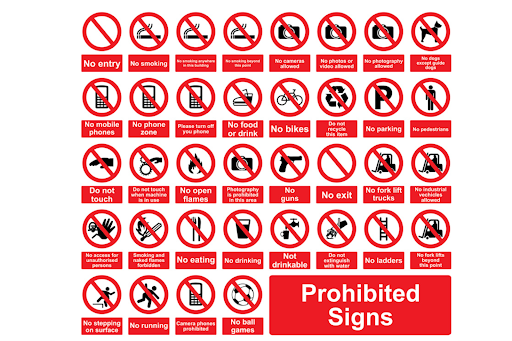
These are signs that prohibit behaviour that is likely to increase or cause danger (e.g. no smoking).
Intrinsic features:
- black pictogram on white background, red edging and diagonal red line (the red part to take up at least 35% of the area of the sign)
- round shape
Safety warning signs
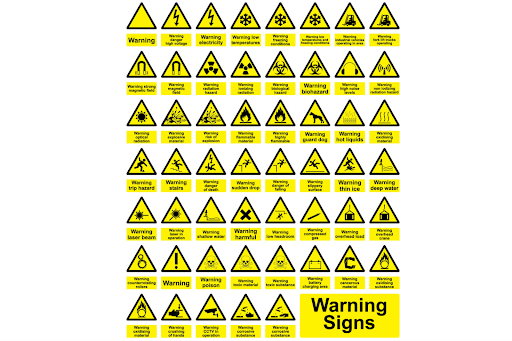
Warning sign: a sign giving warning of a hazard or danger (e.g. danger: dangerous substances)
Intrinsic features:
- triangular shape
- black picture with at least 50% yellow background
Mandatory signs
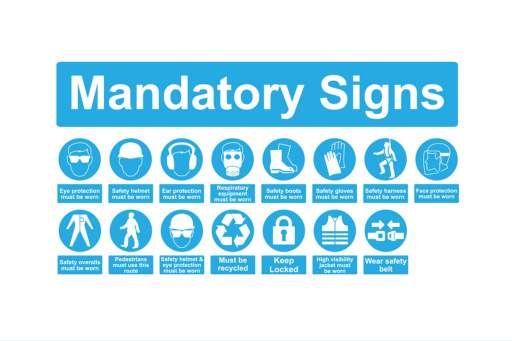
Mandatory sign: a sign prescribing specific behaviour (e.g. eye protection must be worn)
Intrinsic features:
- round shape
- white pictogram on a blue background (the blue part to take up at least 50% of the area of the sign)
Emergency signs
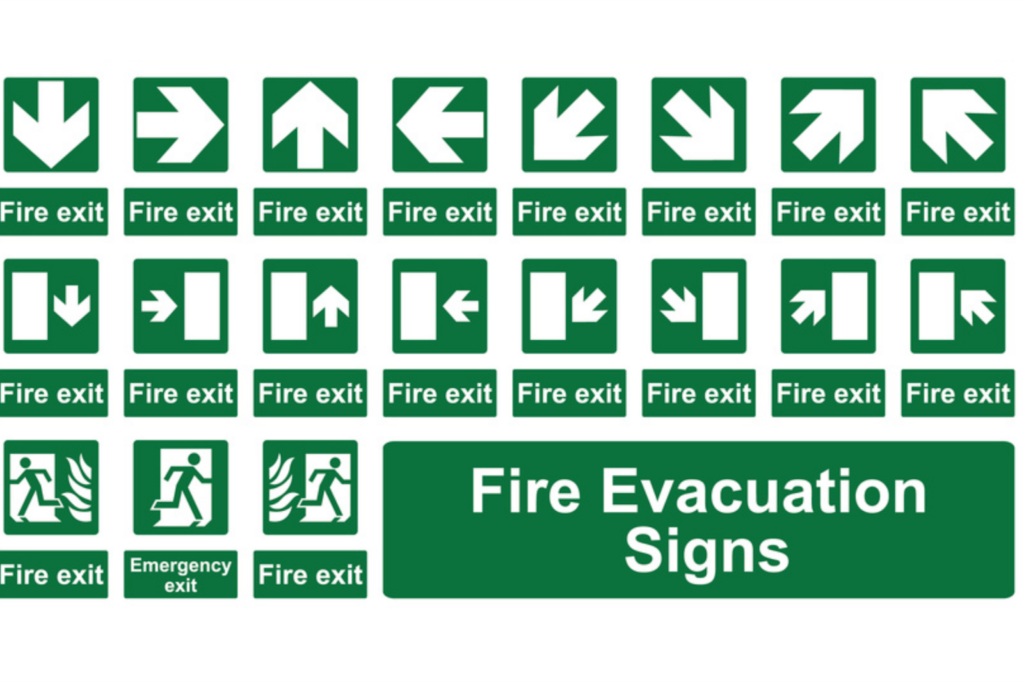
Emergency Signs: signals an emergency escape or to label escape routes.
Intrinsic features:
- White pictogram on a Green background
- Square shape
Spill kit safety signs
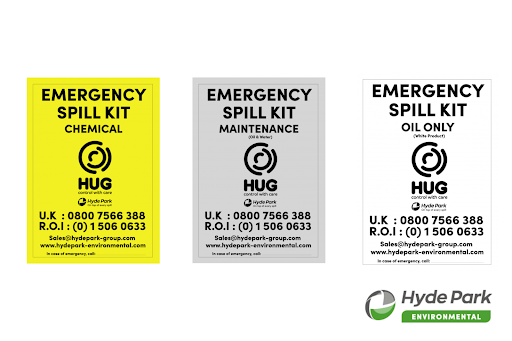
Our range of adhesive spill kit signs are designed to be highly visible and easy to understand, featuring bold text and clear messaging. Manufactured with a durable vinyl coating, these signs are suitable for a variety of workplace environments, offering long-lasting performance even in demanding conditions.
Spill kit safety signs are primarily used to identify the exact location of spill response equipment, ensuring employees can act quickly and effectively during an emergency. They are ideal for use in warehouses, manufacturing facilities, laboratories, and pharmaceutical environments where fast access to spill kits is critical.
Do I need safety signs in my workplace?
To determine if safety signs are necessary for your workplace, you firstly need to conduct a thorough risk assessment (made under the Management of Health and Safety at Work Regulations 1999).
These assessments are designed to identify hazards, the associated risks, and the required measures to be taken. Based on the outcome of the risk assessment, you can determine which types of safety signage must be put up and where.
We’re here to help
If you need more assistance or advice on the type of spill kit safety signs you need? Get in touch with Hyde Park Environmental today.
Straightforward Expertise, Protecting your Reputation.