

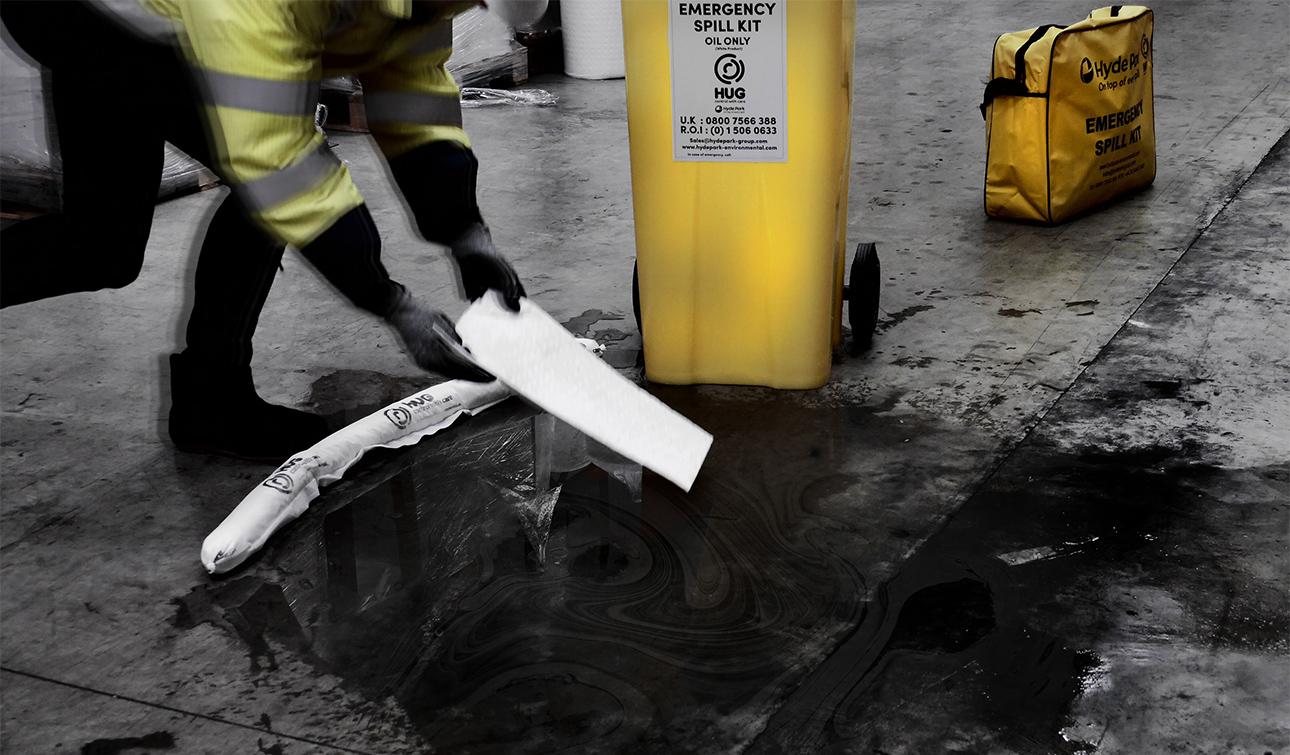
Spill kits are a common sight across industrial sites, warehouses, laboratories, and even smaller commercial premises. But a question we’re often asked is: are spill kits actually a legal requirement in the UK? The answer is a little more nuanced than a simple yes or no.
Are Spill Kits a Legal Requirement?
Strictly speaking, there is no specific UK law that explicitly states businesses must have spill kits on-site. However, that doesn’t mean they’re optional.
Under regulations such as the Control of Substances Hazardous to Health (COSHH) 2002, businesses are legally required to assess risks and implement suitable control measures when working with hazardous substances.
This includes ensuring that effective spill response procedures and equipment are in place to protect employees, property, and the environment.
In practice, the easiest and most widely accepted way to meet this obligation is by having appropriate spill kits readily available.
What Do UK Regulations Actually Require?
While spill kits themselves aren’t named outright in legislation, UK law is clear on outcomes:
- Businesses must prevent or control exposure to hazardous substances (COSHH)
- Employers must protect the environment from contamination
- Sites must have adequate facilities to contain spills and leaks
Additionally, environmental regulations, such as the Control of Pollution (Oil Storage) Regulations 2001, require adequate containment systems, often referred to as secondary containment (e.g. bunding).
Failure to control a spill effectively can lead to enforcement action or prosecution, particularly if it results in pollution.
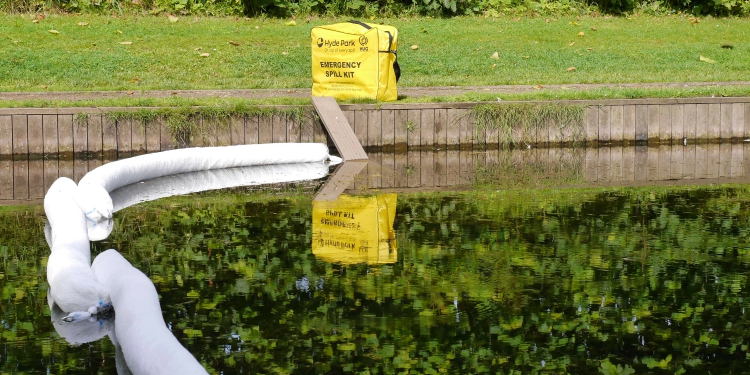
So, Are Spill Kits Necessary?
Even though they’re not explicitly mandated, spill kits are considered best practice and often essential for compliance. Without them, it would be difficult to demonstrate that your business has taken “reasonable steps” to manage spill risks.
Regulators like the HSE expect that appropriate emergency equipment is readily available and maintained, especially in environments handling oils, fuels, or chemicals.
You may not be legally required to buy a spill kit
But you are legally required to deal with spills safely and effectively
Choosing the Right Spill Kit
If your risk assessment identifies a potential for spills, your equipment should match that risk. For example:
- Oil spill kits for fuels and hydrocarbons
- Chemical kits for corrosive or hazardous substances
- General purpose kits for mixed environments
Capacity is key: your kit should be able to handle the largest spill scenario.
While spill kits may not be explicitly written into UK law, they play a critical role in helping businesses meet their legal duties under COSHH and environmental regulations.
For most organisations, having the right spill control equipment in place isn’t just about compliance—it’s about protecting people, property, and the environment.
At Hyde Park Environmental, we work with businesses across the UK to ensure they have the right spill control solutions in place; from compliant storage systems to fully stocked, site-specific spill kits. If you’re unsure what your site requires, getting expert advice is the best place to start.