

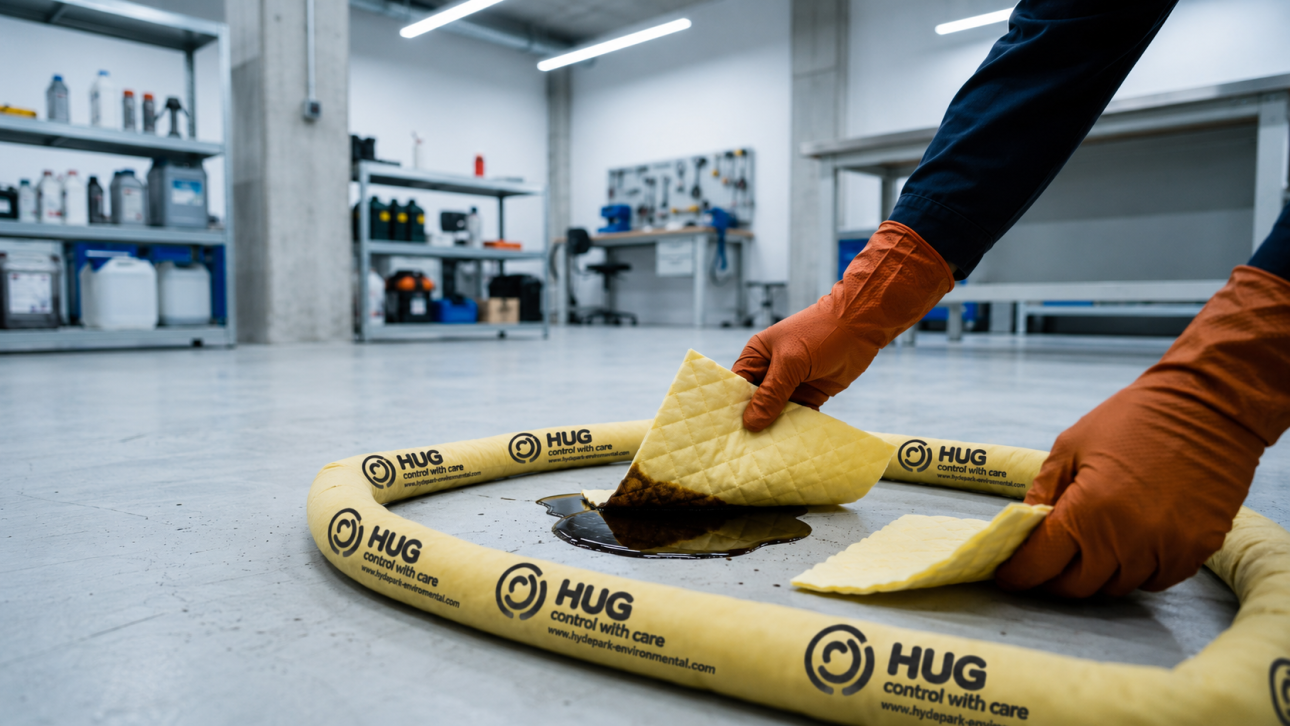
Spills can happen in any workplace, whether it is oil, chemicals, coolants, fuels, or water-based liquids; responding quickly with the correct absorbent products is essential for protecting employees, equipment, and the environment.
Under UK health and safety legislation, businesses have a duty to control substances that could cause harm. The Health and Safety Executive (HSE) advises employers to have suitable spill response procedures and equipment in place to reduce the risk of slips, contamination, fire hazards, and environmental damage. Regulations such as the Control of Substances Hazardous to Health (COSHH) and environmental guidance from the Environment Agency also place responsibilities on businesses to safely contain and dispose of hazardous spills.
Choosing the correct absorbent is one of the most important parts of an effective spill response plan.
Oil Absorbents
Oil absorbents are specifically designed to absorb hydrocarbons such as oils, fuels, diesel, petrol, and lubricants while repelling water. This makes them particularly useful for outdoor environments, marine applications, workshops, and construction sites where oil spills may occur in wet conditions.
Typically recognised by their white colour, oil-only absorbents can be used on waterways, around machinery, fuel storage areas, and loading bays. Because they do not absorb rainwater, they remain effective and economical during outdoor use.
Oil absorbent products commonly include:
These products help businesses quickly contain spills before they spread into drains or surrounding ground, helping support compliance with pollution prevention guidance.
Chemical Absorbents
Chemical absorbents are designed for hazardous or aggressive substances including acids, alkalis, solvents, coolants, and unknown liquids. Usually yellow in colour for easy identification, they are manufactured to withstand corrosive chemicals that could damage standard absorbents.
Using the wrong absorbent on a chemical spill can create additional hazards, including dangerous reactions or ineffective containment. This is why workplaces handling hazardous substances should always carry out a COSHH assessment and ensure the correct spill response materials are available nearby.
Chemical absorbents are commonly used in:
- Laboratories
- Manufacturing plants
- Chemical storage areas
- Pharmaceutical facilities
For higher-risk environments, spill kits should also include suitable PPE such as gloves, goggles, and disposal bags.
General Purpose Absorbents
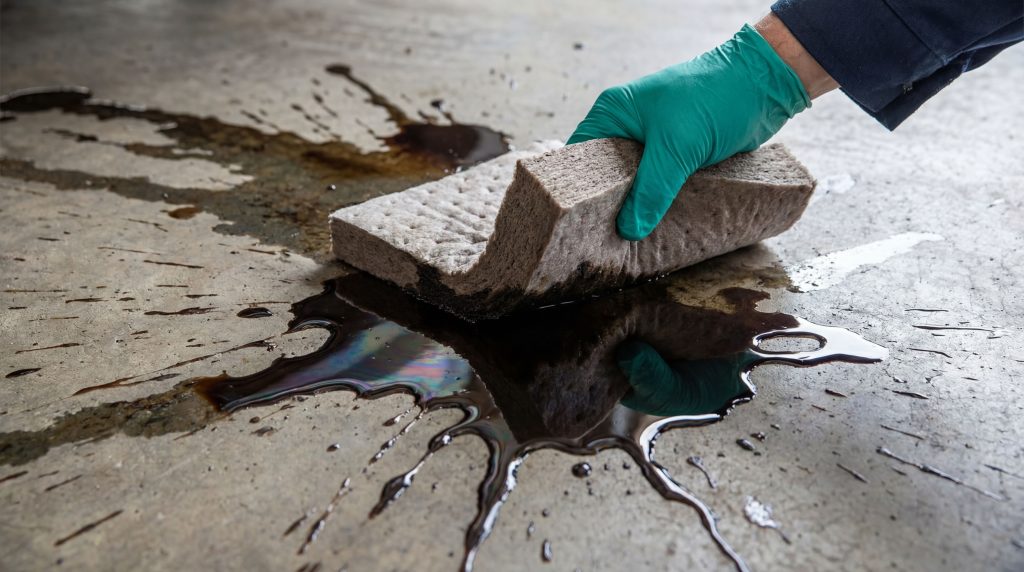
General purpose absorbents are suitable for non-aggressive liquids such as water, coolants, paints, mild chemicals, and oils. Often grey in colour, they are widely used across warehouses, maintenance areas, garages, and factories for day-to-day spill control.
These absorbents provide a versatile and cost-effective solution for businesses that encounter mixed liquid spills but do not regularly handle highly hazardous substances.
Why Spill Preparedness Matters
Spill response is not simply about cleaning up liquid quickly. Poor spill management can lead to workplace injuries, environmental fines, damaged equipment, operational downtime, and reputational harm. Having the correct absorbents readily available helps businesses respond immediately, reduce risks, and maintain safer working environments.
At Hyde Park Environmental, we support businesses across a wide range of industries with spill control solutions tailored to their workplace requirements. Our services include site visits, risk assessments, our spill control and containment supply, and practical spill response training to help ensure staff are prepared to react safely and effectively in the event of a spill.