

In the push toward zero-waste kitchens, much of the attention goes to packaging, food scraps, and composting. However, one challenge is often overlooked: liquid waste and spills (oils, sauces, cleaning fluids, wash water). Even small amounts- if rinsed straight into drains- can cause blockages, pollution, or regulatory penalties. In the UK, food businesses must not allow cooking oil to spill or pour it into sewers or drains — doing so can lead to prosecution.
There are regulatory requirements for spill control and waste management that food and beverage businesses in the UK and Ireland must follow. These hygiene standards emphasise the importance of zero-waste kitchen practices, ensuring that liquid waste, spills, and food by-products are contained, treated, and disposed of responsibly to protect both public health and the environment.
- In England, the RPS (Regulatory Position Statement) for treating food waste on site requires secondary containment (bunds or other systems) for any liquid waste stored outdoors so that waste does not escape.
- From the Food Safety & Hygiene guidance, spills should be cleaned immediately and food waste should not be allowed to build up — “clean as you go” is core to hygiene practices.
- More broadly, UK business food waste totals -9.5 million tonnes annually, with large contributions from kitchens and food services.
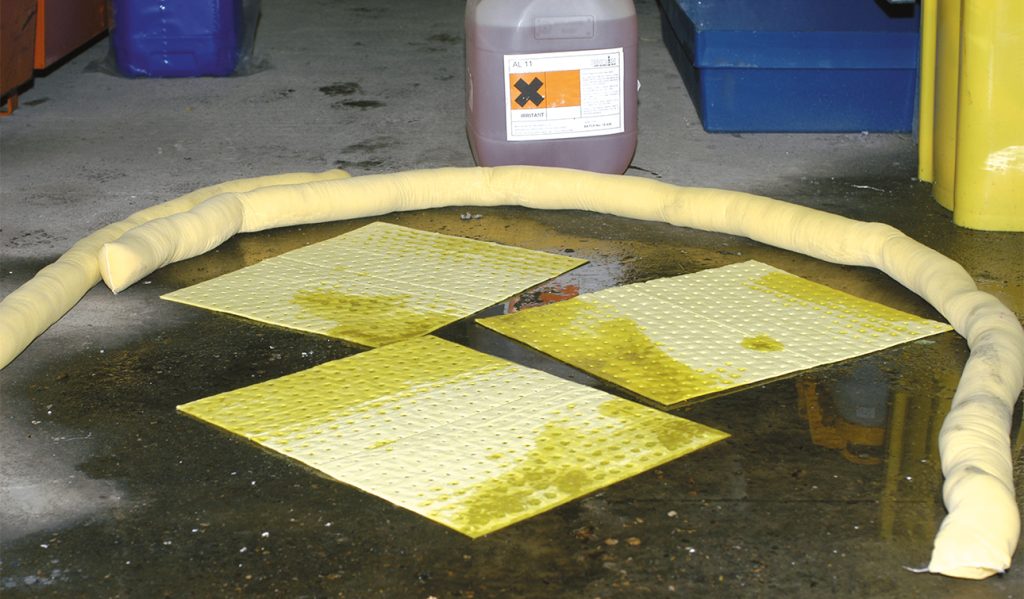
Zero-waste isn’t just about solid waste; it’s about capturing every drop. For F&B sites, that means integrating “closed-loop spill management”: intercepting liquid waste, separating streams (oil, detergents, water), reusing or recycling where possible, and disposing responsibly.
Rather than letting spill residue or wash water slip into drains, kitchens can incorporate containment and reclaim systems that feed back into waste oil recycling, effluent treatment, or safe disposal routes.
Hyde Park Environmental offers a suite of spill control solutions designed for F&B environments — bridging compliance and sustainability:
- Absorbent Mats, Rolls & Pads tailored for oil, chemical, and general liquid spills, capturing leaks before they spread.
- Bunded Storage Units & Spill Pallets that prevent leaks from containers, ensuring liquids stay contained and out of drains.
- Site Surveys & Training Services: Hyde Park helps assess risk zones in your kitchen, recommends product placement, and trains staff in best spill practices.
By integrating these products, kitchens can turn spill control into a key pillar of their zero-waste strategy — intercepting and managing liquid waste rather than washing it away.
Get in touch with Hyde Park Environmental and discover tailored spill control solutions for your F&B business today.